Introduction
On December 23, 2022, President Biden signed into law the Water Resources Development Act of 2022 (WRDA 2022). The bipartisan legislation authorizes new programs, new studies, and new project starts for the U.S. Army Corps of Engineers (USACE or Corps) and establishes national policy priorities related to the Corps’ major civil works mission areas of navigation, flood and storm risk management, and ecosystem restoration. WRDA 2022 is the latest in a series of biennial enactments that affect the day-to-day operations of the Corps and, by extension, the countless communities around the country that benefit from the Corps’ projects.
WRDA legislation reveals important insights about lawmakers’ priorities for the Corps’ civil works programs. Those priorities run the gamut from parochial efforts to secure funding for local projects to attempting transformative changes in how the agency approaches multifaceted water resources challenges in the face of a changing climate. This report is based on a comprehensive review of WRDA 2022, focusing on the ways in which the new law supports, promotes, and incorporates the principles of Engineering With Nature (EWN).
The EWN initiative launched in 2010, when a team of scientists and engineers at the Corps gathered around the goal of better integrating natural and engineered systems to promote sustainability in the development of water resources infrastructure. Their vision was based on a recognition that civil works projects designed to harness the power of nature would be more successful than those that attempted to control or restrain nature. Today, the EWN team has expanded not only internally within the Corps but also externally, including partnering with the University of Georgia to launch the Network for Engineering With Nature (N-EWN) in 2019. N-EWN enables collaboration among EWN proponents from academia, nongovernmental organizations, and non-federal entities. Together, we seek to promote four key elements that define the EWN approach:
Using science and engineering to produce operational efficiencies
Increasing the value provided by projects to include social, environmental, and economic benefits
Using natural processes to maximize benefit
Using collaborative processes to organize, engage, and focus interests, stakeholders and partners
WRDA 2022 contains many provisions that support EWN principles, from authorizing particular studies that will combine flood risk management benefits with ecosystem restoration, to issuing new policy directives that encourage greater collaboration between USACE district staff and Tribal Nations and other historically underserved communities. Below, we highlight the key features of WRDA 2022 that will promote Engineering With Nature. We begin with new statutory authorities and policy directives that will have nationwide and long-term implications. Next, we describe congressional authorizations for the Corps to conduct new studies, water resource development plans, and new construction starts. We close with a brief overview of the new feasibility studies and construction projects that Congress authorized in the statute. It is beyond the scope of this paper to review the missed opportunities for incorporating EWN principles.
New Program Authorities
WRDA 2022 establishes several new program authorities that could advance the practice of Engineering With Nature. One expands a continuing authority to promote greater implementation of natural or nature-based features. Another gives the Corps broader authority to consider and address compound flood risks. A third creates a new program for assessing whether levees should be set back from their current locations. And a fourth creates a dedicated funding stream for important R&D programs. Each of these topics is explained in more detail below.
Continuing Authority for Small-Scale NNBFs
While much of the Corps’ work is specifically authorized and funded by Congress, the agency also enjoys a certain degree of flexibility to develop smaller water resources infrastructure without congressional pre-approval under “Continuing Authority Programs” (CAPs). In WRDA 1999, Congress established a CAP for “flood mitigation and riverine restoration,” which authorized the Corps to develop small-scale projects designed for dual goals of flood hazard mitigation and riverine restoration, with an emphasis on deploying NNBFs. (1) In WRDA 2022, Congress significantly expanded the scope of the program to include projects along coastlines. (2) This expansion of the Corps’ authority was originally introduced as separate legislation by a bipartisan group of lawmakers in both the House and Senate under the title, “Shoreline Health Oversight, Restoration, Resilience, and Enhancement Act,” (the SHORRE Act).
Importantly from an EWN perspective, the WRDA 2022 amendments to this CAP specifically support using natural or nature-based features (NNBFs). The bill instructs the Corps to “emphasize, to the maximum extent practicable and appropriate, nonstructural approaches to preventing or reducing flood damages flood and hurricane and storm damages, including the use of natural features or nature-based features.” Implementing NNBFs that restore or recreate ecosystem services such as water retention and filtration or dune stabilization provide multifaceted and dynamic protection and risk reduction while generating social, economic, and recreational benefits in ways that grey infrastructure alone does not.
Under this law, the Corps is limited to undertaking projects with a federal cost of less than $15 million without specific congressional authorization. Although many projects are likely to cost more and thus be ineligible for this CAP, it is still an important advancement of the EWN initiative because most other statutory authorities require a non-federal project sponsor to request analysis of NNBFs before the Corps will analyze them alongside other, conventional project alternatives.
Although this program still operates as a CAP and as such does not authorize specific projects or funding amounts, Congress in WRDA 2022 directed the Corps to prioritize projects in certain areas:
- Delaware’s beaches and watersheds
- Louisiana’s coastal areas
- Great Lakes shores and watersheds
- Oregon’s coastal area and the Willamette River basin
- Upper Missouri River basin
- Ohio River tributaries and their watersheds in West Virginia
- Chesapeake Bay watershed and beaches in Maryland
- City of Southport, North Carolina
- Ohio’s Maumee River
- California’s Los Angeles and San Gabriel Rivers
- Kentucky River and its tributaries and watersheds
Projects that serve multiple purposes, such as those undertaken pursuant to this authority, embody the EWN principle of maximizing environmental, social, and economic values.
Considering Comprehensive Flood Risks
A second element of the SHORRE Act that made its way into WRDA 2022 was an expansion of the Corps’ authority to study a full array of flood risks and to design risk management strategies that address multiple sources of risk at once. (3) The Corps’ existing flood risk management (FRM) and hurricane and storm damage risk reduction (HSDRR) authorities had been interpreted as limiting investigations to the risks directly attributable to flood and storm events. This interpretation limits the federal funds available to enhance projects by, for example, designing them both to withstand major storm events and also to reduce community impacts from so-called “sunny day flooding.”
With the passage of WRDA 2022, the non-Federal sponsor of an FRM or HSDRR feasibility study may request that the Corps investigate options for addressing comprehensive flood risks. Upon such a request, the Corps is now required to formulate alternatives to maximize the net benefits from the reduction of comprehensive flood risk…from the isolated and compound effects of–
- a riverine discharge of any magnitude or frequency;
- inundation, wave attack, and erosion coinciding with a hurricane or coastal storm;
- any other driver of flood risk affecting the area within the geographic scope of the study;
- a rainfall event of any magnitude or frequency;
- a tide of any magnitude or frequency;
- seasonal variation in water levels;
- groundwater emergence;
- sea level rise;
- subsidence; or
- flooding associated with tidally influenced portions of rivers/bays/estuaries that are hydrologically connected to the coastal water body (4)
Addressing these other sources of risk in a feasibility study will not necessarily lead to greater consideration (or implementation) of NNBFs. However, it could. For instance, a coastal storm risk management project that incorporates analysis of groundwater emergence might support investigation of NNBFs that reduce damage to roadways from the combined effects of the two hazards, whereas without consideration of groundwater emergence the risk of damage to the roadway might have been underestimated and unaddressed in the project design. (5)
Regardless of whether this new authority increases consideration of NNBFs, it clearly aligns with the principles of EWN in important ways: Namely, conducting a more comprehensive analysis of risks can lead to operational efficiencies and sets the stage for projects that have greater social, economic, and environmental value.
Assessing Levees for Setback Potential
For decades, Congress has supported the Corps’ efforts to plan, design, construct, maintain, and operate levees along our nation’s rivers. Levees are an important risk management tool that have enabled agricultural, commercial, and residential development in areas that are vulnerable to flooding. At the same time, disconnecting rivers from their floodplains has had substantial and negative impacts on ecosystems, and levees constructed decades ago may no longer address changing attitudes about risk, climate-induced hydrological changes, or local development needs.
A levee setback is a critical tool in the EWN approach to fulfilling the Corps’ flood risk management mission, and it is a tool promoted by Congress in WRDA 2022. A levee setback is the realignment of an existing levee or the construction of a new levee that is located away from the active river channel. It combines a structural element (the levee) with an environmental element (the historical floodplain), and together these elements provide flexibility, dynamic, and adaptable protection. The levee provides a physical barrier to floodwater, and the natural floodplain absorbs floodwaters, improves floodwater conveyance, and helps to reduce flood stages and velocity. The benefits are myriad: decreased flood risk to local communities, infrastructure, and farmlands; decreased cost of maintaining and operating levees; enhanced habitat for fish and wildlife; and restored critical ecosystem services such as water filtration and storage.
WRDA 2022 supports periodic assessments for the purposes of implementing levee setbacks for both federally and non-federally operated levee systems. The sense, language, and directives in Section 8121 point to a broad understanding that levees built decades ago, based on historical data and on a narrow flood risk management mission, no longer reflect current circumstances, laws, and policies. The section recognizes the heightened risk posed by climate change and the broader environmental benefits of using levee setbacks and other NNBFs.
Specifically, this section requires the Corps to conduct periodic assessments of federally authorized levees under the Corps’ jurisdiction to evaluate federal interest modifying those levees to meet one or more of three objectives:
- To increase the flood risk reduction benefits of a levee system;
- To achieve greater flood resiliency; or
- To restore hydrological and ecological connections with adjacent floodplains that achieve greater environmental benefits without undermining flood risk reduction or flood resiliency for levee-protected communities
Congress includes a parenthetical explanation of “modification” that the term specifically includes “realignment or incorporation of natural features and nature based features.”
Under this section, the assessment of a levee system must consider the people and structures protected by the system and at risk if it fails or is breached, the history of failures and the cost of repairs, how the system might function under climate change-induced hydrological changes, and the potential benefits and costs of reconnecting the river with historical floodplains. In its report to Congress, the Corps must include any opportunities identified for levee modification and some preliminary information about the willingness and ability of the non-Federal interest to participate, specifically by obtaining any necessary real estate.
Dedicated R&D Funding
In WRDA 2022, Congress establishes dedicated research and development funding to allow ongoing and broad study of water resources development needs and potential innovations. The EWN initiative originated within the Corps’ Engineering Research and Development Center (ERDC) in 2010. Historically, ERDC has operated primarily on “soft money” – research projects were supported by funds from district offices that needed support for specific projects or programs. Districts contract with ERDC for technical support, which leaves ERDC staff constantly in search of funding. This structure promotes entrepreneurship but hinders development and sustainability of long-term research agendas that could improve water resource development.
In WRDA 2022 Congress has proposed a solution, specifically authorizing the Corps to carry out basic, applied, and advanced research activities as required to aid in the planning, design, construction, operation, and maintenance of water resources development projects and to support the missions and authorities of the Corps of Engineers. (6)
Congress paired this broad and ongoing authority with permission to use transactional tools other than contracts, cooperative agreements, and grants to fund prototype projects. Congress also instructed the Corps to work with the White House Office of Management and Budget to establish a separate appropriations account for administering funds that Congress will make available for carrying out R&D activities. Furthermore, Congress has asked the Corps to provide an annual report on research activities.
This new budget authority can be used to advance research and development of nature-based solutions and EWN principles. Congress has clearly indicated a desire to see more NNBFs incorporated into the Corps’ Civil Works projects with various amendments to program authorities in recent WRDA legislation (7), and the reporting requirements attached to this new budgetary authority create an opportunity to highlight R&D efforts that will advance the practice of EWN. Also, the wide array of transactional tools now available to ERDC might be useful in securing partnerships with outside entities to test NNBFs, which could help address the longstanding complaint from practitioners that NNBF concepts have not been adequatelytested in real-world applications.
New Policy Directives
Equity and Justice
With the support of Congress, the Corps has been working to more intentionally pursue social equity in recent years. The pursuit of social equity is a core component of the EWN principle of trying to maximize social benefits from water resources projects. Through its Civil Works mission, the Corps has made an indelible mark on nearly every part of the country, enabling commercial navigation along critical waterways, farming on vast areas of land that are susceptible to extensive flooding, and settlement and continued habitation where there is either too little or too much water. Because historically the projects have been designed to maximize benefits in terms of national economic development, they have also perpetuated and sustained social inequities for economically disadvantaged communities, including Tribes. Reservoirs inundated poor and indigenous communities, projects and project features that protected commercial development were prioritized over those that protected poor residential neighborhoods, and communities without the resources to meet cost-share requirements were simply overlooked.
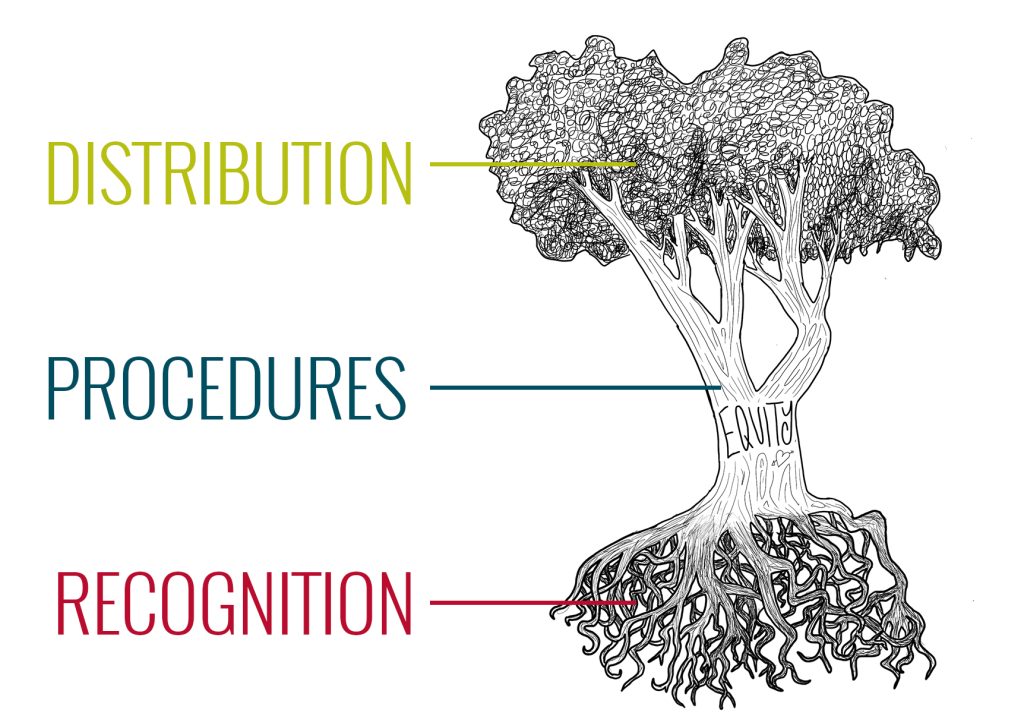
An interdisciplinary team of researchers from the N-EWN has described the pursuit of equity in water resources development in terms of three key pathways: recognitional, procedural, and distributional.8 That is, planning for equitable water resources development must begin with an understanding of existing inequities and their origins, be carried out through procedures that equitably engage all stakeholders, and result in an equitable distribution of the costs and benefits of the projects.
WRDA 2022 includes provisions that promote recognitional, procedural, and distributional equity. These new policies, programs, and authorities are primarily targeted at addressing the needs of tribal communities and economically disadvantaged communities. Economically disadvantaged communities are defined by a previous WRDA bill to include areas with low income levels and high unemployment, although the Corps has the authority to expand the definition and is actively engaged in a rulemaking process to do so. (9)
From a recognitional equity standpoint, Congress recognizes the long-standing need to effectively partner with Tribal communities and with urban and rural economically disadvantaged communities and to address the impact of past Corps projects in these communities. Section 8112 requires Corps districts with federally recognized Tribes within their boundaries to have a Tribal Liaison on staff. (10) This liaison is tasked with making recommendations to increase Tribal participation in and access to Corps programs, improving outreach, cooperation, and engagement with Tribal communities, and assisting the Corps with culturally appropriate treatment of lands with ancestral, historical, or cultural significance. WRDA 2022 also specifically recognizes the historical, adverse impact of dam construction on Tribal communities, housing, and other structures at various sites in Oregon and Washington. Section 8113 directs the Corps to formulate village development plans at these sites to comprehensively address these harmful impacts. These plans will assess suitable Federal and state lands and estimate the cost and preliminary schedule for constructing housing developments. After construction is completed by either the Corps or the affected Tribe, Congress authorizes the Corps to convey the village site to that Tribe. WRDA 2022 also directs the Corps to collect and disseminate information to promote equity in USACE programs and projects. For example, Section 8115 establishes and funds a Tribal and Economically Disadvantaged Communities Advisory Committee that is tasked with recommending how the Corps can more effectively deliver water resources development projects, programs, and other assistance to these communities. (11) The Committee will write and submit a report that considers how best to integrate the needs of these communities when developing water resources projects and other USACE programs and to improve the ability and capacity of Corps staff to assist them. Section 8231 also requires the Corps to report on socially and economically disadvantaged businesses, including documentation of contracts and subcontracts with Small Disadvantaged Businesses and information on how USACE funds are distributed. (12) Collecting this information can help the Corps assess past distribution of funds and ensure that future distribution is more equitable.
WRDA 2022 promotes procedural equity by expanding and funding engagement and outreach, particularly in underserved communities, so that USACE programs and projects can serve a wider audience. Section 8117 emphasizes the national policy of using the Corps’ Civil Works program to address the water resources development needs of all communities, which necessitates outreach to economically disadvantaged communities. (13) Under this section, the Corps is required to provide information for local communities to access Corps assistance and resources, such as identifying existing project authorizations to address local water resources challenges. Congress authorized $30M for these outreach and assistance activities.
As part of the outreach effort, Section 8116 directs USACE to promote science, technology, engineering, and math (STEM) education at all levels and specifically at Historically Black Colleges and Universities. (14) The section also directs the Corps to recruit individuals for careers in the Corps, targeting recruitment of individuals from economically disadvantaged communities.
In WRDA 2022, Congress addresses distributional equity through changes to technical assistance fees and cost-share requirements. Many communities’ water resources development needs are unmet in part because historic patterns of disinvestment have prevented them from establishing the necessary technical expertise to secure Corps assistance and because of their inability to pay their share of the cost of the project as required by statute. As a result, the benefits of federal investment in water resources through the Corps have been inevitably distributed across the country.
To redress this problem, Congress took two approaches to eliminating disparities in distribution of benefits from the Corps’ Civil Works program. First, WRDA 2022 waives the fees that a local government in an economically disadvantaged community would otherwise have to pay for technical assistance. (15) Second, WRDA 2022 reduces the cost-share requirements for federally recognized Tribes. It allocates all costs for certain forms of planning and technical assistance to the Corps, requires the Corps to pay for the first $200,000 of water resource development project feasibility studies, and increases to 100 percent the federal share of water-related planning activity costs. (16)
Third, WRDA 2022 mandates a change in evaluation policies for water resource development projects for flood, hurricane, and storm damage reduction (including erosion control), ecosystem restoration, and preservation of cultural or natural resources in Tribal communities. (17) The bill endorses a project valuation framework that de-emphasizes national economic development benefits and highlights other value propositions such as risk reduction, environmental quality improvements, and improvements to “the long-term viability of the community.” It also increases the cap on project costs that can be undertaken without going through the added process of obtaining specific congressional authorization, from $18.5 million to $26 million. This increase, combined with the new project valuation policy, should enable the Corps to pursue more projects in Tribal communities that would have otherwise been blocked by benefit-cost analysis policies that tend to bias funding in favor of projects in wealthier and more densely developed communities.
Adapting to a Changing Climate
Throughout WRDA 2022, Congress recognizes the current and future impacts of climate change on the Corps’ projects and programs for water resources development. NNBFs retain or mimic ecosystem services that are more flexible and accommodating than gray infrastructure alone. This multi-functional and dynamic capacity is critical for adapting to climate change.
In WRDA 2022, Congress recognizes the need to adapt to climate change both broadly, throughout the programs and projects of the Corps, and for specific types of projects or geographic locations. As mentioned above, in conducting feasibility studies for riverine flood risk management and coastal storm and hurricane damage risk reduction, Congress directs the Corps to formulate project alternatives based on climate change-driven factors such as extreme precipitation events, sea level rise, or “any other driver of flood risk.” (18) Congress also amended the National Levee Safety Program definitions to clarify that rehabilitation under this program can include improvements to increase resilience to extreme weather events (without explicitly mentioning climate change as a driver of such events). (19)
For post-disaster repairs, Congress recognizes that in some cases the original project design level may be outdated and expresses the sense that the Corps should make repairs to a higher level, thus accommodating new climate realities (albeit without explicitly requiring the Corps to do so). (20) In repairing or restoring coastal structures, Congress directs the Corps to ensure that the structure functions adequately to protect against projected changes in wave action, wave height, or storm surge, including changes related to sea-level rise. (21)
WRDA 2022 recognizes the need to adapt to climate change for specific geographic locations and for specific communities as well. Goals laid out by Congress include promoting resilience to climate change and ocean acidification in the San Francisco Bay and Puget Sound, (22) planning to prepare and adapt to changing hydrological and climatic conditions and extreme weather events that affect Tribal communities, (23) and sustaining irrigation and reservoir systems in response to those same conditions in the Acequias Irrigation System in New Mexico (24) and generally among water infrastructure in the western United States. (25)
Research to Support Future Policy Changes
WRDA 2022 directs the Corps, GAO, and others to undertake various studies and research on energy efficiency, valuation policies, and lands needed for projects, indicating that Congress may be considering future policy changes. Several of the topics that will be researched suggest progress toward broader incorporation of EWN principles, including:
Section 8232 instructs the Corps to identify opportunities to install photovoltaic solar panels on Corps properties and as an element of water resources development projects. (26) This research aligns with the EWN principle of maximizing project benefits through multi-purpose project design. Water resource development project authorities will most likely need to be amended in future WRDA bills to establish authority for such improvements and sort out how best to apportion design and construction costs – and long-term energy-production benefits – from the panels.
Section 8233 instructs the Corps to identify alternative measures to determine the economic value of open space lands. (27) Capturing the full benefit and value of lands maintained for open space, recreation, or habitat could provide incentives to preserve such lands as part of a Corps project because the costs of purchasing lands are generally borne by the local partner and credited against the local partner’s cost-share requirements.
Section 8235 instructs the Corps to investigate whether increased use of easements could promote greater participation from landowners in addressing local flooding or ecosystem restoration. (28) These easements or other interests in real property reserve rights for the Secretary that are necessary to construct, operate, or maintain a water resources development project. Purchasing easements instead of purchasing land in fee could reduce project costs significantly for some projects, such as levee setbacks. Section 8236 calls for several GAO reports. Two that have clear links to EWN principles are: a study on the geographic distribution of Corps projects, and a study examining mitigation efforts for water resources development projects. (29)
Section 8237 instructs the Corps to undertake an assessment of forest, rangeland, and watershed restoration services on lands owned by the Corps.30 This study is also supposed to investigate whether public-private partnerships between the Corps and non-Federal interests for “the provision of such services” is in the best interest of the United States. This study implicates the core EWN principles of maximizing project benefits and building multi-stakeholder partnerships.
Miscellaneous EWN-Related Policy Directives
WRDA 2022 contains several other policy directives that have EWN implications. In brief,
these include:
Sections 8130 and 8132 promote beneficial use of dredged material. Dredged material can be used for beach nourishment, thin-layer placement to enhance coastal marshes, and other applications that provide economic, environmental, and social benefits beyond those available from typical disposal approaches. Section 8130 requires the Corps to develop a strategic plan for maximizing the beneficial use of dredged material, (31) and Section 8132 allows the Corps to choose a beneficial use for dredged material even if it is not the least-cost disposal option when the project is based at an “underserved community harbor.” (32)
Section 8137 says that the Corps “is encouraged to consider measures to restore swamps and other wetland forests” in feasibility studies supporting ecosystem restoration, flood risk management, and hurricane and storm damage risk reduction projects. (33) This provision does not explicitly alter any existing authorities but could be interpreted as doing so. Existing law requires the Corps to investigate NNBFs as part of FRM and CSRM feasibility studies, but leaves it to the Corps’ discretion to decide which NNBFs to analyze. (34) This provision of WRDA 2022 could be interpreted as, at a minimum, requiring analysis of restored swamps and wetland forests. Such an interpretation may be a stretch because the statutory language does not include words typically used to denote a mandatory duty (such as “the Corps shall…”), but this section is nonetheless an important endorsement of an EWN tool.
Section 8140 requires the Corps to review and, if necessary, update all internal policy guidance and technical standards on a five-year cycle. (35) The documents covered by this new rule are highly influential in the day-to-day operations of the Corps and significantly affect project development. The Planning Guidance Notebook (Engineering Regulation 1105-2-100) is perhaps the most important example, providing overall direction for how a civil works project goes from an idea to the point at which headquarters has approved the preferred design. Documents subject to this new law can also be narrow in scope. Engineering Pamphlets, for instance, can describe best practices for stakeholder engagement, sea-level change, or other targeted elements of the project delivery process. EWN proponents have suggested that some of these documents establish or entrench biases against nature-based solutions, (36) so the new requirement that they be updated on a regular basis creates a leverage point for enhancing consideration of NNBFs. The Corps’ ability to comply with this mandate will be constrained by available resources because Congress has not provided any new funding to undertake the work.
Section 8140 is also noteworthy because it puts additional pressure on the Corps to follow through relatively quickly on the WRDA 2020 requirement to establish agency-specific procedures for the Principles, Requirements, and Guidelines for Water Resources Development (PR&G). The PR&G apply across federal agencies and lay out a new framework for evaluating and planning water resources projects. Critically, and in line with EWN principles, the PR&G encourage agencies to adopt a more comprehensive approach to evaluating project costs and benefits. The Corps is currently undertaking a rulemaking process to develop regulations that would implement the PR&G and might drastically alter how civil works projects develop. Any rules codified through this process will then have to be clarified through policy documents that are now on a five-year review cycle.
Section 8150 requires the Corps to establish an advisory committee comprising non-Federal stakeholders to provide recommendations regarding ways the Corps can “to ensure more effective and efficient delivery of water resources development projects, programs, and other assistance.” (37) That committee’s recommendations could play an important role in promoting EWN principles. For instance, they might address policy changes that the Corps could undertake to ensure that local preferences for greater implementation of NNBFs are addressed early in the planning process.
New Studies, Plan Development, and Project Starts
The new program authorities and new policy directives described above will have crosscutting impacts on the Corps’ operations in the years ahead. Yet they are overshadowed in press coverage about WRDA 2022 by reports on elements of the legislation that will bring huge amounts of federal funding to local communities. WRDA 2022 authorizes billions of dollars in spending on new construction, feasibility studies to support future construction, and water resources planning that sets the stage for a variety of projects. Examining the EWN potential in this vast catalog of work is beyond the scope of this report; below, we endeavor to provide an overview of the possibilities.
New Feasibility Studies
It is important for proponents of EWN to be aware of the WRDA 2022 feasibility study authorizations because the studies present a prime opportunity to ensure that the principles of EWN are incorporated into the Corps’ major civil works projects from an early stage.
The Corps’ major civil works projects for flood risk management, hurricane and storm damage risk reduction, ecosystem restoration, and navigation each begin with a feasibility study developed at the district level. These studies are generally supposed to be completed under the Corps’ “3 x 3 x 3” framework, which means they are completed at a cost of $3 million or less, in three years or fewer, with three levels of approval (district, division, and departmental). A feasibility study involves project design, public engagement, and regulatory analysis including review under the National Environmental Policy Act (NEPA), Endangered Species Act (ESA), and more. The end result is a “Chief’s Report,” which lays out the preferred approach to addressing the water resource challenge at issue along with a proposed budget for the project. The Chief’s Report is submitted to Congress for consideration as a project to be authorized in a future WRDA.
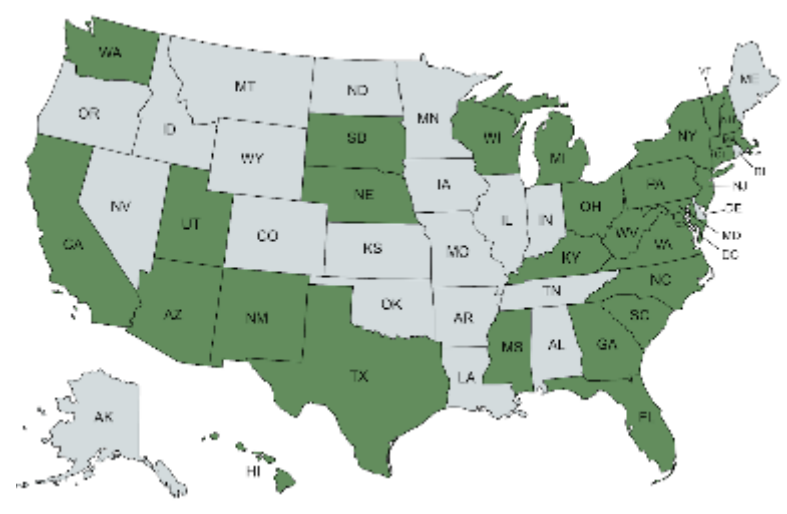
In WRDA 2022, Congress authorized the Corps to begin work on more than 90 new feasibility studies covering projects in 28 states and the District of Columbia. (38) Nearly all water resources challenges that the Corps deals with have some potential for implementing EWN practices, but the congressionally authorized scope of some studies makes it far more likely that project development teams will carry NNBFs through from the scoping phase of the study to their preferred design. For instance, Congress has authorized more than 40 feasibility studies for the sole purpose of addressing either inland flood risk management or coastal storm risk management, but it has also authorized more than 30 additional studies for a combined purpose of inland or coastal storm risk management and ecosystem restoration. By directing the Corps to incorporate ecosystem restoration into these risk management projects, Congress is sending a clear message about its desire to see more civil works projects that use EWN principles.
| State | Location | Study purpose, from § 8201(a) |
| California | City of Rialto | ecosystem restoration and flood risk management |
| California | Northern Richmond | hurricane and storm damage reduction, including sea level rise, and ecosystem restoration |
| Connecticut | Thatchbed Island | flood risk management and ecosystem restoration |
| Florida | Tampa Back Bay | flood risk management and hurricane and storm damage risk reduction, including the use of natural features and nature-based features for protection and recreation |
| Florida | Lake Tohopekaliga | ecosystem restoration and flood risk management |
| Georgia | Cumberland Island and Sea Island | ecosystem restoration and coastal storm risk management |
| Georgia | Flint River Basin Headquarters, Clayton County | flood risk management and ecosystem restoration |
| Hawaii | Waikiki | ecosystem restoration and hurricane and storm damage risk reduction |
| Kentucky | Newport | ecosystem restoration, flood risk management, and recreation |
| Massachusetts | Assawompset Pond Complex | ecosystem restoration, flood risk management, and water supply |
| Massachusetts | Charles River | flood risk management and ecosystem restoration |
| Massachusetts | Chelsea Creek and Mill Creek | risk management and ecosystem restoration, including bank stabilization |
| Massachusetts | Deerfield River | flood risk management and ecosystem restoration |
| Massachusetts | Ten Mile River, Town of North Attleborough | ecosystem restoration and flood risk management |
| Massachusetts | City of Revere | flood risk management and marsh ecosystem restoration |
| Michigan | Grosse Pointe Shores and Grosse Pointe Farms | ecosystem restoration and flood risk management |
| Michigan | Tittabawassee River, Chippewa River, Pine River, and Tobacco River | flood risk management and ecosystem restoration |
| Mississippi | Southwest Mississippi – Wilkinson, Adams, Warren, Claiborne, Franklin, Amite, and Jefferson Counties | ecosystem restoration and flood risk management |
| New Jersey | Maurice River | navigation and for beneficial use of dredged materials for hurricane and storm damage risk reduction and ecosystem restoration |
| New Jersey | Rockaway River | flood risk management and ecosystem restoration, including bank stabilization |
| New York | Blind Brook | flood risk management, coastal storm risk management, navigation, ecosystem restoration, and water supply |
| New York | Hutchinson River | flood risk management and ecosystem restoration |
| New York | Mohawk River Basin | flood risk management, navigation, and environmental restoration |
| New York | Saw Mill River | flood risk management and ecosystem restoration |
| New York | South Shore of Long Island | flood and coastal storm risk management, navigation, and ecosystem restoration |
| Pennsylvania | Brodhead Creek Watershed | ecosystem restoration and flood risk management |
| South Carolina | Berkeley Creek | ecosystem restoration and flood risk management |
| Texas | Hidalgo and Cameron Counties | flood risk management and ecosystem restoration |
| Texas | Sikes Lake | ecosystem restoration and flood risk management |
| Utah | Great Salt Lake | ecosystem restoration and water supply |
| Virginia | Cedar Island | ecosystem restoration, hurricane and storm damage risk reduction, and navigation |
Comprehensive Planning
In addition to the project-scale studies described above, Congress uses WRDA bills to authorize the Corps to lead more extensive studies of water resource challenges across the country. Typically, these authorizations not only direct the Corps to conduct more comprehensive evaluations of multidimensional challenges and opportunities, but also demand coordination with other government agencies at the state, regional, national, and even international levels. They result in reports that establish the need for future infrastructure development and they can be instrumental in aligning institutions around common goals.
These comprehensive planning efforts are an ideal opportunity to incorporate EWN principles into water resources management. Indeed, in recent years, Congress has specifically mentioned implementation of NNBFs as a goal of some authorized comprehensive planning projects.
In WRDA 2022, Congress authorizes several such projects:
Chattahoochee River Basin Restoration Plan: Congress authorized the Corps to develop, “in cooperation with State and local governmental officials and affected stakeholders,” a comprehensive restoration plan for the Chattahoochee River Basin. The plan is due in December 2024 and is supposed to include recommended projects ranging from sediment and erosion control to ecosystem restoration to wastewater treatment plant upgrades, all of which should enhance water quality, water quantity, and living resources in the river’s basin. Congress authorized $40 million for the Corps to develop the comprehensive plan and begin funding engineering design and construction of high-priority projects. Notably, Congress directed the Corps to prioritize projects that “will improve water quality or quantity or use a combination of structural and nonstructural measures, including alternatives that use natural features or nature-based features” (emphasis added). (39) This provision could thus drive millions of dollars in EWN-related funding to the Chattahoochee River Basin.
Lower Mississippi River Basin Restoration Plan: Congress has authorized the development of a comprehensive restoration plan for the Lower Mississippi River Basin that emphasizes flood or coastal storm risk management or ecosystem restoration. Congress again authorized $40 million dollars for the program, a two-year deadline for completing the plan, a similarly broad list of potential projects, and a prioritization scheme that emphasizes the use of NNBFs. (40)
Western Infrastructure Study: Congress authorized a major review of reservoirs that the Corps owns and operates in the southwestern US. This authorization instructs the Corps to “evaluate the effectiveness of carrying out additional measures, including measures that use natural features or nature-based features, at or upstream of covered reservoirs” for purposes including adapting operations for climate change, mitigating risks of drought and floods, increasing water supply, and restoring aquatic ecosystems. (41) The specific reference to NNBFs here creates an important opportunity for implementing EWN principles and practices.
Comprehensive Central and Southern Florida Study: Congress authorized a broad feasibility study of “resiliency and comprehensive improvements or modifications to existing water resources development projects in the central and southern Florida area, for the purposes of flood risk management, water supply, ecosystem restoration (including preventing saltwater intrusion), recreation, and related purposes.” (42)
Congress further instructed the Corps to recommend both structural and nonstructural projects that contribute to “systemwide approach” to addressing those issues. This focus on nonstructural elements aligns with EWN principles.
New Project Starts
In each WRDA bill, Congress authorizes a number of new project starts. These are projects for which Congress authorized feasibility studies in previous WRDA bills and the Corps has subsequently completed a “Chief’s Report” that summarizes the preferred approach (known as the “Recommended Plan” or “Agency’s Preferred Approach”). The Chief’s Reports contain sufficient information about the project to identify those with clear EWN connections. WRDA 2022 authorizes a significant number of projects that incorporate nature-based solutions.
WRDA 2022 authorized 25 new projects in 15 states and Puerto Rico: five projects primarily authorized for navigation, six for riverine flood risk management, 11 for hurricane and coastal storm damage risk reduction, two for ecosystem restoration, and one – the $34 billion Coastal Texas Resiliency Improvement Plan – that explicitly combines flood risk management and ecosystem restoration in a “multiple lines of defense” approach.
N-EWN highlights drawn from the authorized projects’ Chief’s Reports include: The Tacoma Harbor, Washington, navigation project, where the Corps’ preferred plan is to use 76 percent of the dredged material for beneficial use. The project involves deepening and widening the Blair Waterway to accommodate larger container ships. The least-cost approach to disposing of the dredged material would involve placing it in an open-water site nearby. Instead, building on EWN principles, the Corps plans to use most of the dredged material to restore up to 64 acres of nearshore intertidal and subtidal substrate conditions at a location that was degraded by decades of industrial use. As with any beneficial reuse plan for dredged material from an industrial harbor, concerns about contaminated sediment have been raised (here mainly by the Puyallup Tribe), but the Corps’ sampling indicates that the restoration efforts will deliver substantial benefits for fish and wildlife, including threatened and endangered species.
The Pinellas County (Treasure Island and Long Key), Florida, coastal storm risk management project, where the Corps’ preferred plan involves construction of dune and berm features to reduce risks of storm damage. Dune construction will include native plants, which not only stabilize the dunes (improving risk reduction capacity) but also create habitat for wildlife. Seawall and floodwall construction was screened out of the feasibility study at an early stage in favor of the EWN-consistent use of dunes and berms. Moreover, the Corps plans to use sand from nearby navigational dredging operations as the source for this project, another example of beneficial use of dredged material.
The Coastal Texas Resiliency Improvement Plan, where the Corps has planned creation or restoration of thousands of acres of coastal habitat. The Corps and its local partners have planned over $2.6 billion in ecosystem restoration work that not only benefits fish, wildlife, and other environmental resources but that also enhances resilience of the grey infrastructure that currently exists and will be built as part of the project.

Conclusion
Many of the new programs, policy directives, and study and planning requirements in WRDA 2022 capture EWN principles both explicitly and implicitly. WRDA 2022 increases the likelihood that current and future Corps projects will have multiple risk reduction, environmental, social, and economic benefits and will meet the water resources development needs in a wide range of communities. EWN principles are critical to ensuring that Corps programs and projects address heightened risks from climate-driven changes and meet expansive public values that favor more than economic benefits. Gathering information on historical impacts of Corps projects and fund distribution, assessing the feasibility of alternative approaches to flood risk reduction, and conducting comprehensive planning or long-term research and development position the Corps to maximize benefits of its projects. The new projects authorized in 2022, as well as other aspects of the legislation, will increase the number of communities that receive Corps assistance and flood protection. Where EWN principles are not specifically mentioned, WRDA 2022 provides many points where Corps staff and partners may introduce or further study them on the path toward implementation. Overall, WRDA 2022 promotes EWN principles in critical Corps programs, ensuring the vision of the original EWN team is thriving.
Footnotes
- Pub. L. 106-53, Title II § 212, 113 Stat. 288 (Aug. 17, 1999), codified at 33 USC § 2332.
- Pub. L. 117-263, Div. H, Title LXXXI, § 8103, 136 Stat. 3696 (Dec. 23, 2022).
- Pub. L. 117-263, Div. H, Title LXXXI, § 8106, 136 Stat. 3699 (Dec. 23, 2022).
- Pub. L. 117-263, Div. H, Title LXXXI, § 8106, 136 Stat. 3699 (Dec. 23, 2022).
- See National Oceanic and Atmospheric Administration, National Ocean Service, National Centers for Coastal Ocean Science, “Pavement Resilience to Sea Level Rise and Potential Mitigation Options Using Natural and Nature-Based Features,” at https://coastalscience.noaa.gov/project/coastal-communities-pavement-resilience-to-sea-level-rise-using-natural-and-nature-based-features/
- Pub. L. 117-263, Div. H, Title LXXXI, § 8160, 136 Stat. 3741 (Dec. 23, 2022).
- See Nicole T. Carter and Eva Lipiec, Congressional Research Service, “Flood Risk Reduction from Natural and Nature-Based Features: Army Corps of Engineers Authorities,” R46328 (Apr. 27, 2020), available at https://crsreports.congress.gov/product/pdf/R/R46328
- Seigerman et al., “Operationalizing equity for integrated water resources management,” J. Am. Water Res. Assn., (2022), available at https://doi.org/10.1111/1752-1688.13086
- US Army Corps of Engineers, “Notice of Virtual Public and Tribal Meetings Regarding the Modernization of Army Civil Works Policy Priorities; Establishment of a Public Docket; Request for Input,” 87 Fed. Reg. 33,756 (June 3, 2022).
- Pub. L. 117-263, Div. H, Title LXXXI, § 8112, 136 Stat. 3704 (Dec. 23, 2022).
- Pub. L. 117-263, Div. H, Title LXXXI, § 8115, 136 Stat. 3707 (Dec. 23, 2022).
- Pub. L. 117-263, Div. H, Title LXXXI, § 8231, 136 Stat. 3766 (Dec. 23, 2022).
- Pub. L. 117-263, Div. H, Title LXXXI, § 8117, 136 Stat. 3709 (Dec. 23, 2022).
- Pub. L. 117-263, Div. H, Title LXXXI, § 8116, 136 Stat. 3709 (Dec. 23, 2022).
- Pub. L. 117-263, Div. H, Title LXXXI, § 8119, 136 Stat. 3711 (Dec. 23, 2022).
- Pub. L. 117-263, Div. H, Title LXXXI, § 8111, 136 Stat. 3703 (Dec. 23, 2022).
- Pub. L. 117-263, Div. H, Title LXXXI, § 8111, 136 Stat. 3703 (Dec. 23, 2022).
- Pub. L. 117-263, Div. H, Title LXXXI, § 8106, 136 Stat. 3699 (Dec. 23, 2022).
- Pub. L. 117-263, Div. H, Title LXXXI, § 8387, 136 Stat. 3699 (Dec. 23, 2022).
- Pub. L. 117-263, Div. H, Title LXXXI, § 8162, 136 Stat. 3744 (Dec. 23, 2022).
- Pub. L. 117-263, Div. H, Title LXXXI, § 8101, 136 Stat. 3695 (Dec. 23, 2022).
- Pub. L. 117-263, Div. H, Title LXXXI, § 8501, 136 Stat. 3845 (Dec. 23, 2022).
- Pub. L. 117-263, Div. H, Title LXXXI, § 8111, 136 Stat. 3703 (Dec. 23, 2022).
- Pub. L. 117-263, Div. H, Title LXXXI, § 8311, 136 Stat. 3781 (Dec. 23, 2022).
- Pub. L. 117-263, Div. H, Title LXXXI, § 8208, 136 Stat. 3756 (Dec. 23, 2022).
- Pub. L. 117-263, Div. H, Title LXXXI, § 8232, 136 Stat. 3766 (Dec. 23, 2022).
- Pub. L. 117-263, Div. H, Title LXXXI, § 8233, 136 Stat. 3767 (Dec. 23, 2022).
- Pub. L. 117-263, Div. H, Title LXXXI, § 8235, 136 Stat. 3768 (Dec. 23, 2022).
- Pub. L. 117-263, Div. H, Title LXXXI, § 8236, 136 Stat. 3769 (Dec. 23, 2022).
- Pub. L. 117-263, Div. H, Title LXXXI, § 8237, 136 Stat. 3773 (Dec. 23, 2022).
- Pub. L. 117-263, Div. H, Title LXXXI, § 8130, 136 Stat. 3717 (Dec. 23, 2022).
- Pub. L. 117-263, Div. H, Title LXXXI, § 8150, 136 Stat. 3719 (Dec. 23, 2022).
- Pub. L. 117-263, Div. H, Title LXXXI, § 8137, 136 Stat. 3723 (Dec. 23, 2022).
- 33 USC § 2282 note.
- Pub. L. 117-263, Div. H, Title LXXXI, § 8140, 136 Stat. 3723 (Dec. 23, 2022).
- Nelson et al., “Challenges to realizing the potential of nature-based solutions,” 45 Curr. Op. Envtl. Sustainability 49 (2020), available at https://doi.org/10.1016/j.cosust.2020.09.001.
- Pub. L. 117-263, Div. H, Title LXXXI, § 8150, 136 Stat. 3731 (Dec. 23, 2022)
- Pub. L. 117-263, Div. H, Title LXXXI, § 8201, 136 Stat. 3744 (Dec. 23, 2022).
- Pub. L. 117-263, Div. H, Title LXXXI, § 8144, 136 Stat. 3724 (Dec. 23, 2022).
- Pub. L. 117-263, Div. H, Title LXXXI, § 8145, 136 Stat. 3726 (Dec. 23, 2022).
- Pub. L. 117-263, Div. H, Title LXXXI, § 8208, 136 Stat. 3756 (Dec. 23, 2022).
- Pub. L. 117-263, Div. H, Title LXXXI, § 8214, 136 Stat. 3759 (Dec. 23, 2022).