

The 25th annual American Ecological Engineering Society (AEES) meeting will be held here in Athens in just one month! As we finalize the agenda and get ready to welcome conservation engineers from across the country back to Athens, we’re especially excited to hear from these keynote speakers:
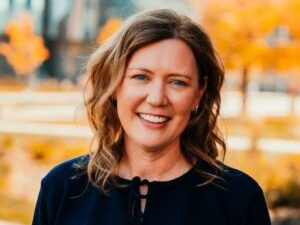
Dr. Sara Winnike McMillan is an ecological engineer and biogeochemist in the Department of Agricultural and Biosystems Engineering at Iowa State University. She is also a Professional Engineer with expertise in restoration, natural infrastructure, and agricultural conservation. Sara’s research focuses on how humans impact water quality in rivers, lakes, and wetlands and how climate change will affect access to clean water, sustainable food production, and healthy ecosystems. Her research focuses on applying these principles along the rural-urban continuum and partners with local stakeholders and decision makers to implement solutions that benefit humans and the environment. She uses lab and field-based techniques along with modeling tools to develop solutions to environmental problems. Her current research focuses on restoring ecosystems to improve water quality including projects on regenerative agriculture, watershed management, and and river restoration.
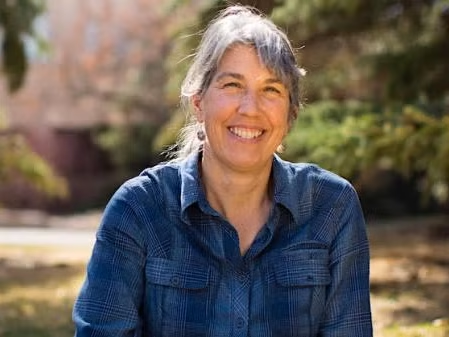
Dr. Ellen Wohl is a fluvial geomorphologist and professor of geology with the Warner College of Natural Resources at Colorado State University. From her personal website: “My research has followed an anabranching path through time. My dissertation research focused on sedimentary records of ancient floods along bedrock canyons in northern Australia. Working in these canyons, I became intrigued by their channel morphology and the processes that created and maintained this morphology, so for several years I worked primarily on bedrock canyons. Many of these canyons occur in mountainous environments. Living in Colorado, the Front Range and Rocky Mountain National Park are the ‘backyard’ research sites, so my research focus shifted gradually toward mountain streams. The mountain streams of Colorado include a fair amount of instream wood. At some point I realized that most of the existing research on instream wood had been done in the very different environment of the Pacific Northwest, so that led me to focus on wood dynamics in Colorado and in headwater neotropical streams of Panama and Costa Rica. Wood dynamics in mountainous headwater streams are intimately connected to carbon cycling, stream metabolism, and river ecosystem productivity, and now several research projects focus on these aspects of mountain streams. In the course of mapping logjams in Rocky Mountain National Park, I kept coming across abandoned beaver dams, and began to wonder about the effects of these dams on carbon cycling and watershed-scale biogeochemistry. That’s a big component of the fun of research: you start on one path, but never know exactly where it will take you.”
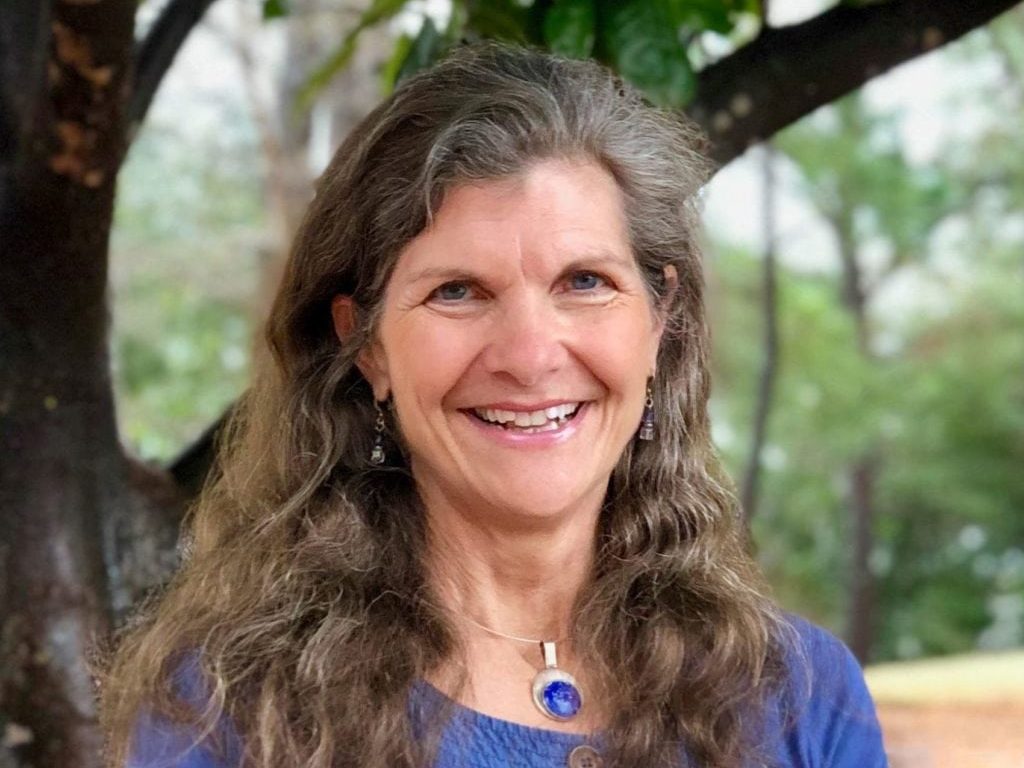
Dr. Amy Daum Rosemond studies the effects of land-use change and climate change on the health and vitality of streams and rivers. She is the UGA Foundation Professor in Ecology and Distinguished Research Professor at the University of Georgia. She was elected as a Fellow of the Ecological Society of America “for creative and influential experimental research on the food web, microbial, and biogeochemical dynamics of aquatic ecosystems” in 2018 and received UGA’s Creative Research Medal in Natural Sciences and Engineering that same year. She served as President of the Society for Freshwater Science (SFS, 2019-2020) and is the lead Principal Investigator/Project Director of the Emerge Program, which is conducted in conjunction with SFS to broaden participation and leadership in the field of freshwater science. Rosemond teaches freshwater and ecosystems courses at UGA and has served as the major advisor to more than 20 graduate students and postdocs. With her collaborators and students, she has over 100 peer-reviewed publications on a broad range of topics that examine the effects and mechanisms of global change stressors on streams and rivers, with funding from the National Science Foundation, U.S. EPA, U.S. Department of Defense, Georgia Water Resources Institute, and other agencies. Her research program is motivated by society’s need for healthy, resilient freshwater ecosystems, equitable access to their goods and services, and the long-term sustainability of aquatic life. Her current studies focus on how elevated temperature and nutrient pollution affect stream functions.
Don’t forget to register for the gathering! Registration is open until May 15. Learn more here.