
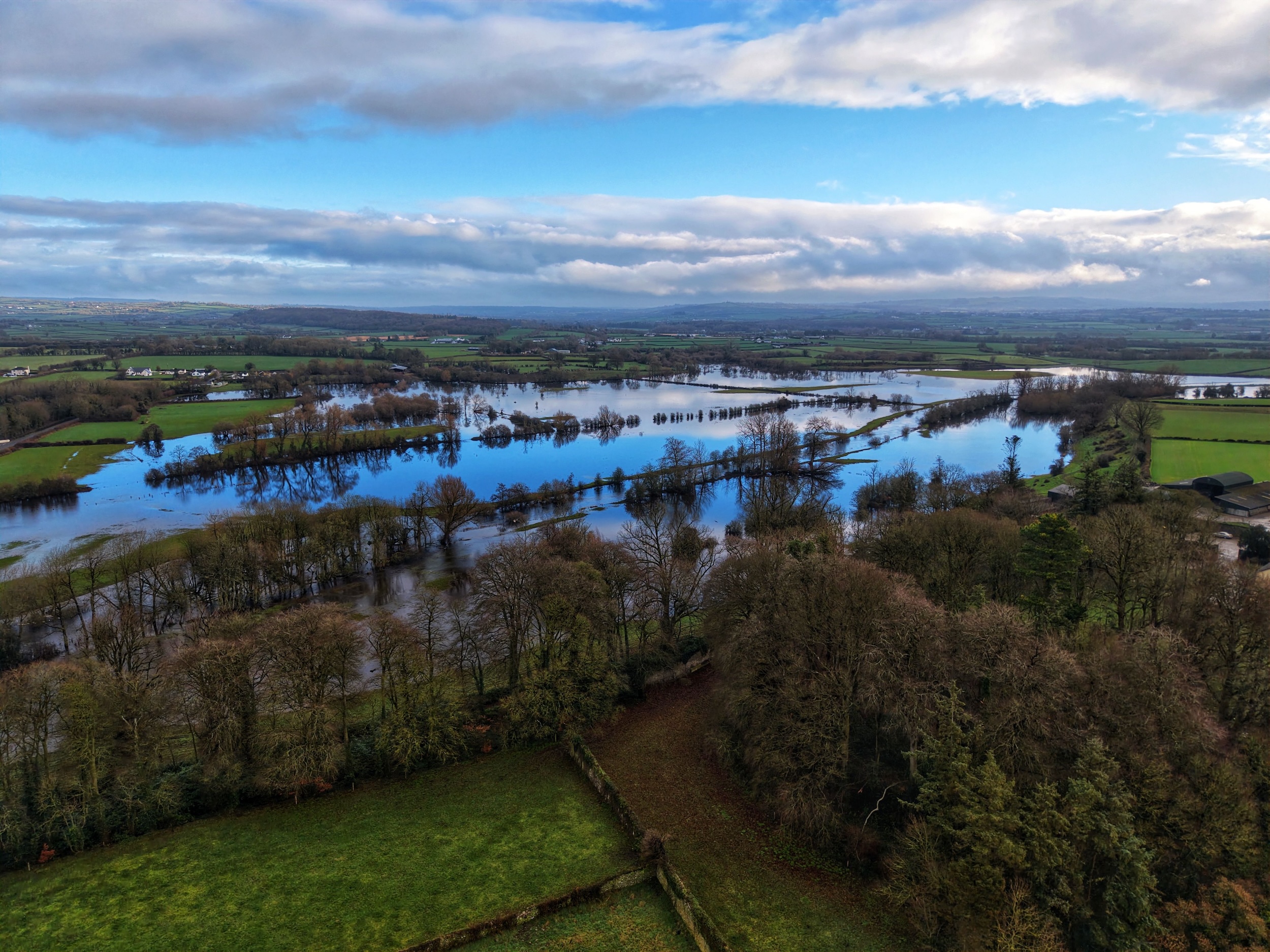
Managing stormwater is a critical function of civil infrastructure.
On paper, methods that manage stormwater sustainably using natural materials and techniques sound ideal; they perform infrastructure functions with reduced harm to the environment, and may even provide ecosystem benefits. This two-birds-one-stone philosophy is often how nature-based solutions for stormwater are presented in both academic literature and project proposals.
But does green stormwater infrastructure do what we think it’s doing?
The need for GSI
As cities expand in both spatial footprint and population, and extreme precipitation events become increasingly frequent and intense, stormwater infrastructure is becoming more important than ever, especially in the rapidly expanding urban and economic centers of Georgia.
Green stormwater infrastructure (GSI) involves managing these stormwater challenges through ecosystems: small wetlands and ponds, usually human-constructed, mitigate flood hazards in their vicinity by giving rainwater somewhere to go. These spaces also help protect water quality by retaining materials or substances that have accumulated in the flood, preventing them from moving downstream. Research also provides evidence for additional benefits, from natural beauty and recreation opportunities that positively impact human health to healthier habitat for urban wildlife.
The goal of GSI is to replicate ecosystem functions in constructed spaces, reducing environmental harm while improving infrastructure services by creating a more naturally flowing system. The problem? There’s limited evidence definitively showing that GSI actually works that way.
Unlocking the GSI “black box”
In engineering terms, this problem is a “black box”–what goes in and what comes out can be understood, but the internal workings are a mystery, giving project managers limited ability to guarantee success when proposing a project or troubleshooting a solution that doesn’t work as expected.
Ecologists, engineers, scientists, landscape architects and policy experts across the University of Georgia are coming together to open the box and study the GSI system as an ever-changing system, rather than an engineered artifact like a dam.
“Our assertion was that GSI should be viewed for what they are: artificial ecosystems,” said project lead Charles van Rees, an Odum School of Ecology conservation biologist, “and if they’re not performing as planned, that means we don’t understand the ecosystem, and we’re not managing it properly. We’re suggesting that ecological theory and knowledge is the key to doing this right.”
When a constructed wetland is installed primarily to retain water, the design is pretty straightforward and success is easy enough to measure. But the evidence is mixed when looking at whether GSI improves environmental metrics like water quality or habitat, with limited success stories that can definitively show whether the constructed wetland is making a difference– or even making things worse.
The team holding the keys
Bringing ecological information into what is usually an engineering and landscape architecture discussion was the first step. The group then added computer scientists and AI experts, economists, policy scholars, and a host of practitioners from outside UGA to create a diverse interdisciplinary hub for improving GSI in both research and practice.
“The activities by which we proposed to do that were to convene meetings and workshops, to form this group by having some conversations to apply for grants, to form corporate and practitioner partnerships, and then to collect data, to go to some of these features and ask questions about their ecology,” said van Rees.
The team was awarded a 2026 Presidential Interdisciplinary Seed Grant by the University of Georgia to support these actions, and they’re making big plans for the data they plan to collect on hydrology and water chemistry, carbon sequestration potential, and the insects, birds and bats that live nearby.
“The other big thing we’ve done so far,” he continued, “is hold a really successful three-day workshop.” The workshop, held in June 2026, brought together UGA researchers with representatives from local government agencies, environmental nonprofit organizations, private industry, regional commissions, and scientists from the University of Florida and University of Louisville.

As the team continues to define their project, the scope of questions they plan to answer keeps growing. But that’s not a problem– it’s an opportunity for community engagement and improving the practice of green infrastructure.
“We’re interested in growing the conversation, so if there are people who are interested in this topic and have something to contribute to that conversation, or practitioners that want to learn or to test things in their own systems, we’d like to be in dialogue with them,” said van Rees.
Learn more about the Presidential Interdisciplinary Seed Grant awarded to this group here, and stay tuned for more updates from this group!
Good work comes from good teams.
This Interdisciplinary Seed Grant team includes IRIS research affiliates Charles van Rees (primary investigator, Odum School of Ecology), Scott Carver and Seth Wenger (Odum School of Ecology), Brock Woodson and Alysha Helmrich (College of Engineering), Qiong Wang (College of Environment and Design), Jessica Brown (Public Service and Outreach), and Rhett Jackson (Warnell School of Forestry and Natural Resources).
The team also includes UGA’s Geng Yuan (Franklin College of Arts and Sciences, School of Computing), Franklin Leach (Franklin College of Arts and Sciences, department of chemistry) and Steffney Thompson (School of Law), as well as external partners Hunter Howell (City of Atlanta Watershed Management); Mason Ailstock (Rowen Foundation); Kyle McKay (Woolpert); and Paula Marcinek (The Nature Conservancy in Georgia).