
Transforming the systems that manage flood risk is challenging even in the best circumstances. In places facing overlapping disasters, political conflict and fragmented institutions, it can be even more daunting.
A team of researchers, government officials and nonprofit leaders is tackling that challenge by bringing together people and perspectives.
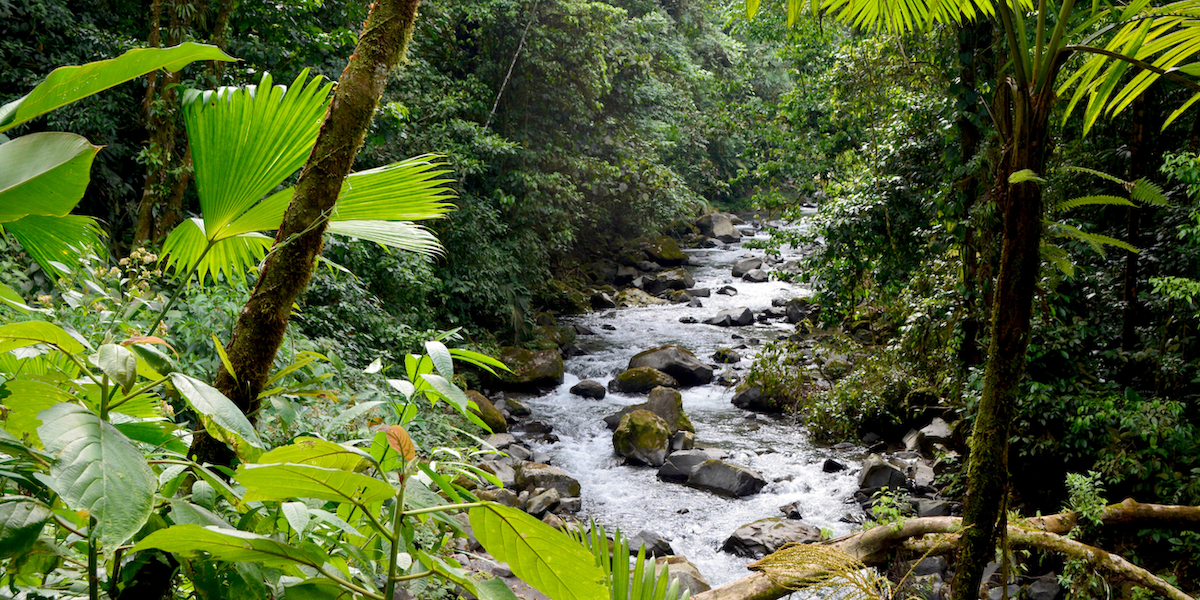
The Río Piedras watershed, encompassing nearly all of urban San Juan, has experienced the complexity of flood risk management firsthand. As local and federal governments work to make future management decisions, other actors are getting involved. In 2015, the Alianza por la Cuenca del Río Piedras (La Alianza) was formed, bringing together a coalition of local professionals, researchers, and citizens with personal stake and interest in the issue.
The watershed’s complex flood issues began making headlines with Hurricanes Irma and María and the revival of a controversial project to channelize the river by the US Army Corps of Engineers (USACE). In response, La Alianza began serving as a multisectoral platform for promoting transformative collaborative governance.
A research team (notably, also members of La Alianza) was funded by the National Oceanic and Atmospheric Administration (NOAA) to support diverse governance actors in co-producing knowledge and enhancing urban sustainability and resilience. Their work from 2019 to 2025 resulted in a series of lessons learned from processes to activities to build transformative, multi-level collaborative, and participatory governance.
These lessons learned are now broadly accessible in their new guidebook, Navigating Everything, Everywhere, All at Once: Insights into Transformative Adaptation Governance in Conflicted and Changing Contexts, that draws upon the years of experience of La Alianza and the research team. One of the project co-leads, Alysha Helmrich (UGA), reflects on the publication of the guidebook, “This project wouldn’t have been possible without the years, decades of work already invested by many of our team members. It’s important to recognize that time and trust as this work continues to unfold.”
For project lead Tischa Muñoz-Erickson, the lessons learned offer guidance for other communities navigating uncertainty and conflict: transformative governance means making complex systems more accessible at every level.
“In times of overlapping crises, political conflict, and uncertainty,” she explained, “the approaches most likely to enable transformative governance and adaptation pathways pair sequential, responsive engagement with people at every level of power–from communities to top government leadership–while making the governance system legible, alternative visions visible, and the science understandable.”
The research team brings forth four key principles for collaborative and participatory governance:
- Transformative change involves dismantling, e.g., disrupting dominant narratives that underpin existing pathways and planning processes.
- Transformative change involves understanding the governance systems that need changing.
- Transformative change involves weaving disparate, fragmented, and conflicting efforts into a fabric that can withstand significant uncertainty and surprise.
- Transformative change involves enabling imaginations to break free of current roles, responsibilities, and mandates.
In the Río Piedras watershed, the processes and activities that made up this work have brought together people with different objectives, priorities and visions for the watershed. Those differences and tensions haven’t disappeared, but something has changed.
“There’s a better understanding of the governance system and a momentum towards integrated watershed management,” said @Alysha Helmrich (UGA). The team acknowledges that it is still, ultimately, to be determined if their interventions will lead to change in the governance system, but the capacities and relationships cultivated in the watershed remain active and generative.
This type of work rarely fits neatly into the traditional timeline and workflow of research and funding, but the team’s experience and lessons learned help envision flood risk solutions that address needs and concerns from all levels. The guidebook offers a deeper look at what the team learned in Puerto Rico, along with a roadmap (and reflection opportunities) for communities working toward more adaptive, collaborative approaches to flood risk.